
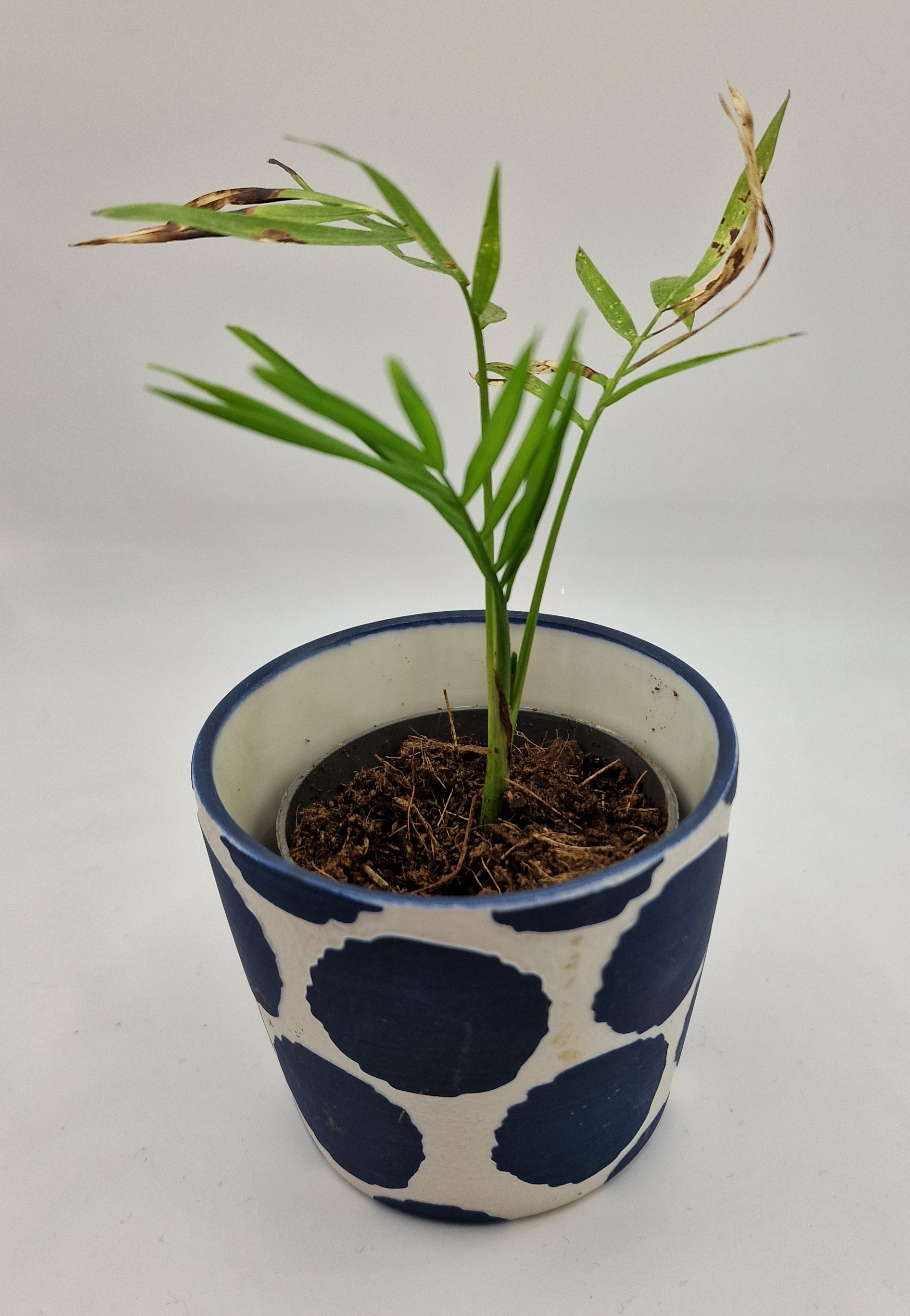
Parlour Palm
🏥 Recovery Room: Parlour Palm Case File
The Origin Story: A Springtime Hope
The first in what will be our “Recovery Room” series, these posts aim to reflect upon the lessons we’ve learned—the good, the bad, and the slightly wilted. We’ll be sharing how these experiences have contributed to our development as “recovering brown thumbs,” and whether we successfully nursed these plants back to health or had to say a final, somber goodbye.
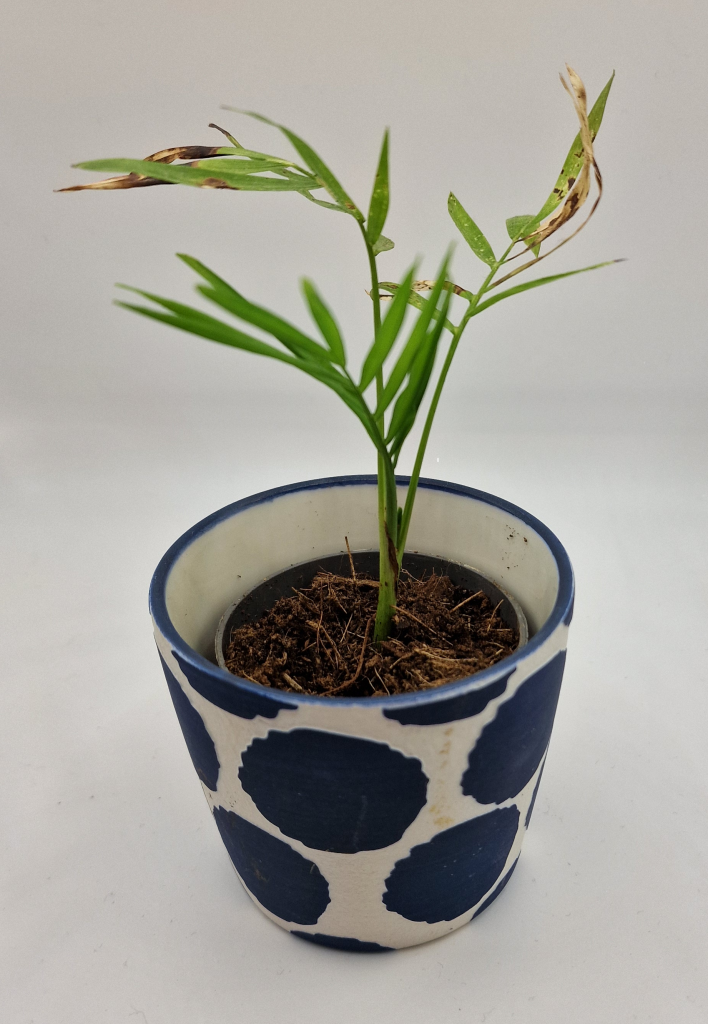
First up is our Parlour Palm (Chamaedorea elegans). This was a recruit from our “absolute beginner” era, purchased from B&Q during their spring seasonal range.
What makes this a unique entry for the Recovery Room is that it didn’t arrive in bad shape. In fact, it was a perfectly healthy, vibrant specimen upon purchase. For months, it remained a lush and attractive centerpiece of our growing jungle—right up until the summer hit.
The Incident Report: The Great Thrip Epidemic
Unfortunately, during the summer of last year, a perfect storm of inexperience and ongoing house renovations led to a growing epidemic of Thrips. The “Patient Zero” was a rescue plant we had brought in, and before we knew it, the infestation had gone viral.
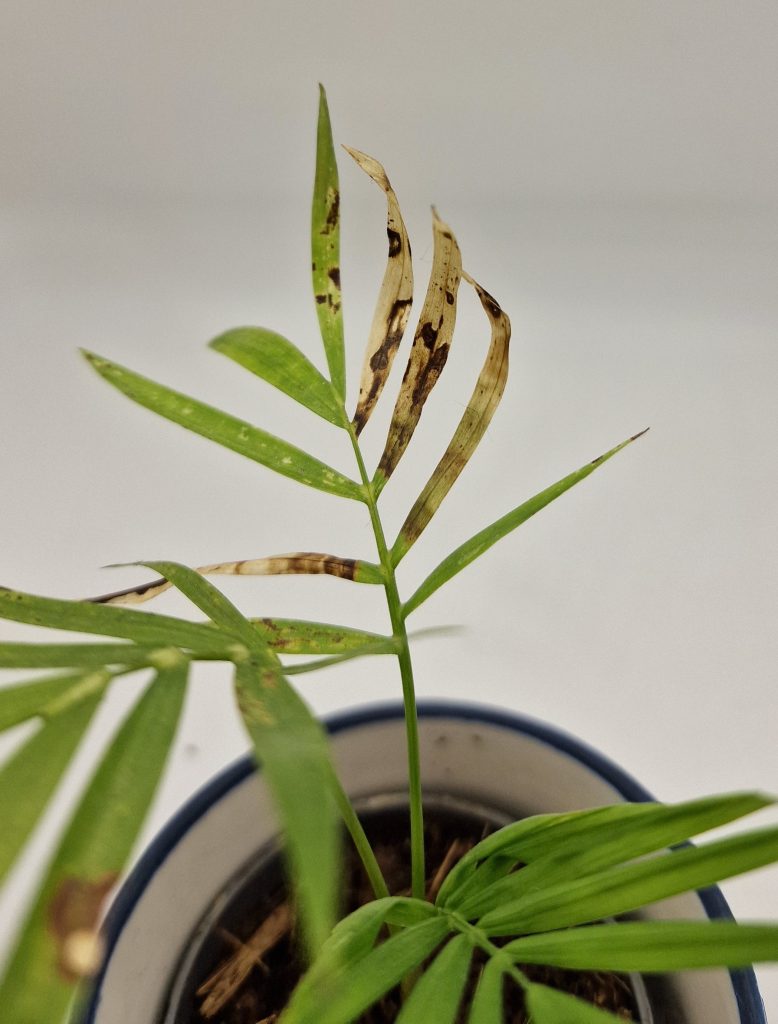
Worst of all, by the time we actually understood and acknowledged the problem, the damage was done. Thrips are subtle until they aren’t, and they had already done a number on the troops. Over the course of a single month, our casualty list grew:
- The Catalyst: A cactus that helped start the spiral.
- The Venus Flytrap: In an act of sheer desperation, we overwatered it, not realizing the Thrips were already devouring it from the inside out.
- The Golden Pothos: Once lush, now balding and retreating.
- The Aloe Vera: Putting up its best fight for survival against an invisible enemy.
By the time we finally grasped the gravity of the situation, the Parlour Palm was all but dead. What was once a vibrant, bushy plant had been reduced to just two stems showing the faintest signs of life.
The Treatment Plan: A “Hail Mary” in a Whisky Glass
After spending weeks trying to solve the mystery of the “phantom death” stalking our plants, we realized that water wasn’t the culprit—those tiny, emerging black dots were. In our initial ignorance, we assumed it was just decay, but the reality was far more sinister.
Armed with a soft cloth, fresh compost, and bug spray, we declared war. We wiped every leaf, swapped waterlogged soil for a well-draining mix, and transitioned to bottom watering. Sadly, for our Parlour Palm, the invasion seemed to have won. It looked defeated… or so we thought.
Out of a mix of guilt and stubborn hope, we left the “wee soul” on the kitchen windowsill. By the end of autumn, during a deep clean, we discovered a miracle: a tiny spark of new life.
Despite online warnings that Parlour Palms are highly susceptible to repotting stress, we knew it needed a “Hail Mary” to survive. We meticulously pulled away dead growth and old thrip damage, being careful to preserve the two remaining stems. We made a strategic choice not to trim the damaged leaves, hoping they could still pull in enough light to fuel a comeback.
Then came the experimental twist: Hydroponics. We moved it into an old whisky glass with a two-week rotation of fresh rainwater. This allowed us to monitor the roots directly and keep the environment sterile.
The Outcome: The Wee Soul Returns
It didn’t take long for the experiment to pay off. Within weeks, fresh white roots began to push out into the water. Even better, a new shoot appeared at the base, slowly unfurling into a fresh stem with healthy leaves. Against all odds, the Parlour Palm had survived the “Great Epidemic.”
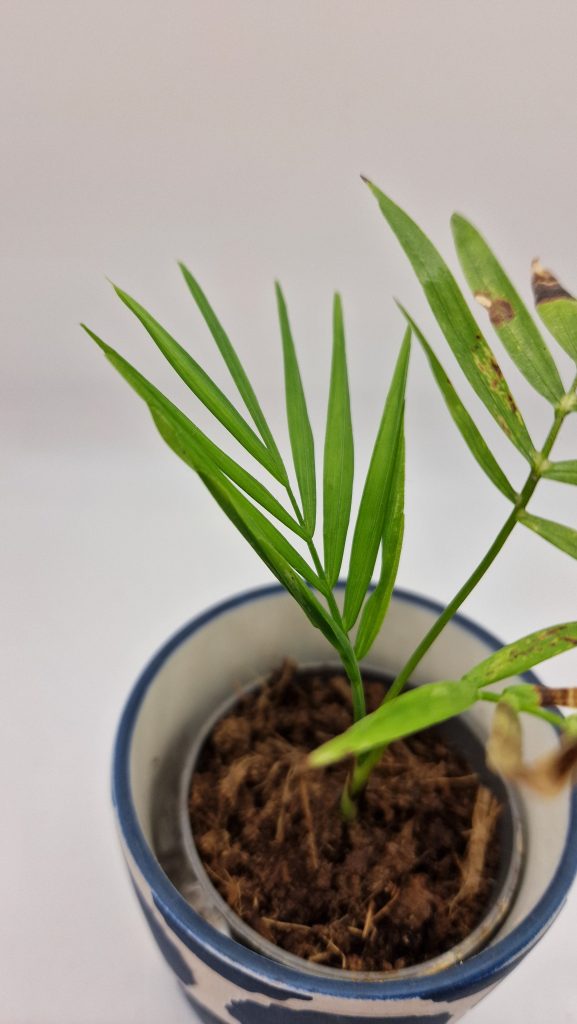
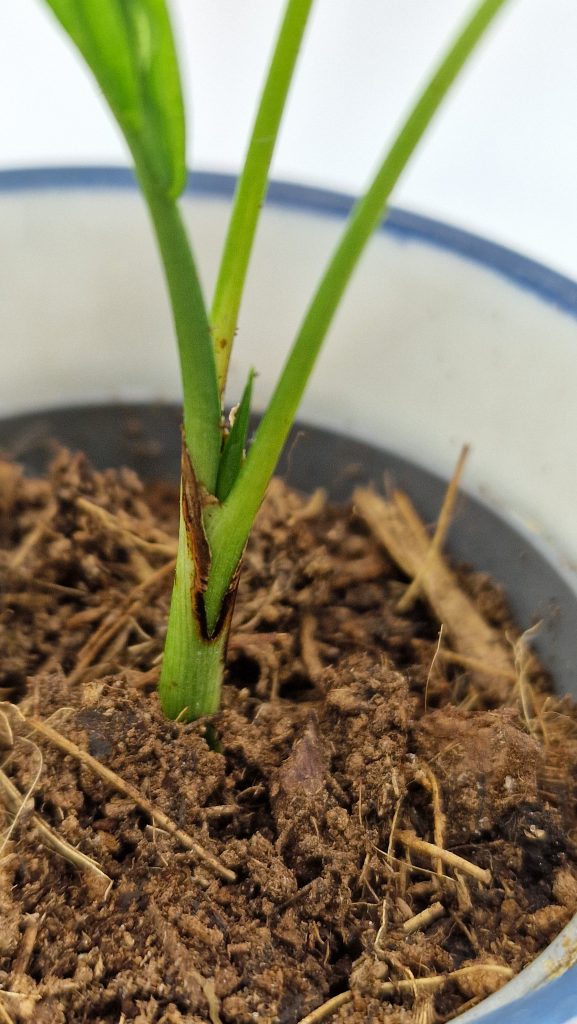
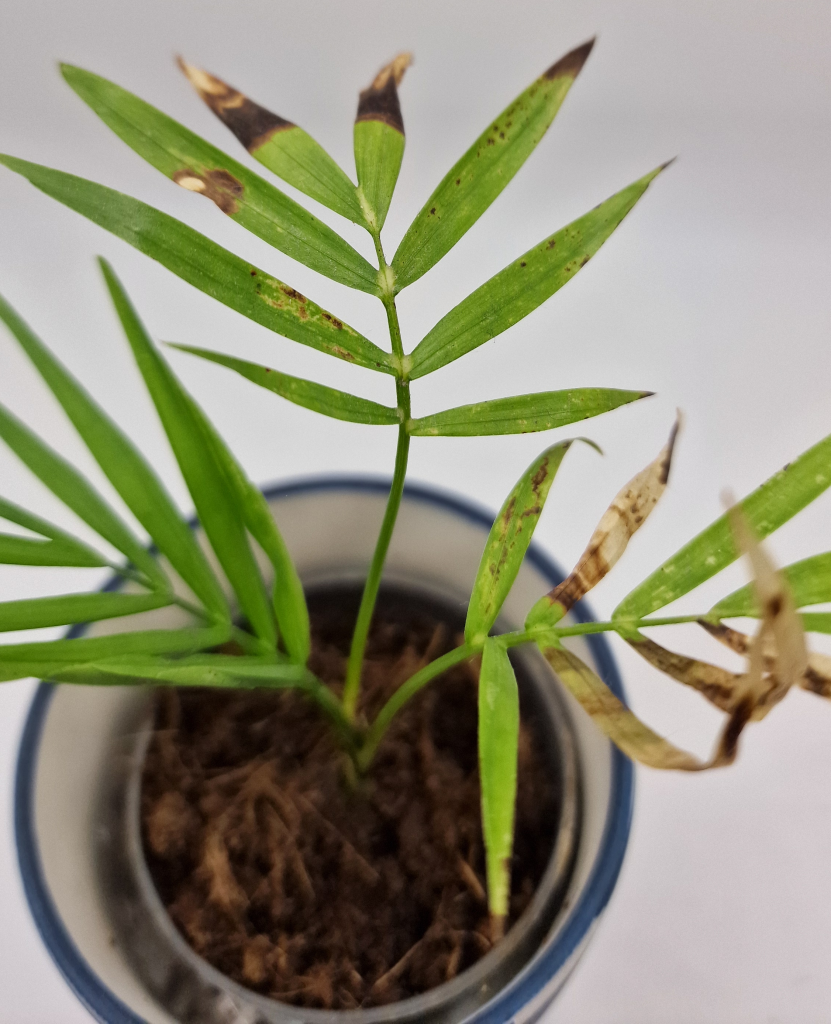
- Current Status: Work In Progress
- The Evidence: Our Parlour Palm is moving from one win to the next. Two weeks ago, encouraged by the new roots in the whisky glass, I transitioned it back into a smaller pot with a fresh mix. It’s now stationed on my desk in the bedroom, about a metre from the window. I’ve been diligent with bottom-watering, ensuring I drain every bit of surplus so those new roots don’t get “swamp foot.” Today, the comeback was made official: a brand-new stem is pushing through.
- The Lesson Learned: Battlefield Wisdom In hindsight, this was the ultimate trial by fire for handling a pest outbreak. Whether you’re buying from a high-end nursery or a “rescue” rack, the reality is that pests like Thrips, Mealybugs, and Spider Mites are a common occupational hazard of being a plant parent. While Bug Killer was our immediate weapon of choice, this experience has pushed us to expand our arsenal. We’ve started experimenting with Neem Oil as a natural control measure and, more importantly, we’ve learned to be proactive. We no longer just “look” at our plants; we inspect them. Identifying the evidence before it becomes an epidemic is the difference between a thriving jungle and a recovery room.
Explorer’s Verdict
⚠️ Still Under Observation
Jungle Pro-Tip: The Renovation Risk
Watch the Dust! If you are doing house renovations, your plants are at a higher risk for pests. Construction dust settles on the leaves, clogging their “pores” (stomata) and stressing the plant. A stressed plant is a beacon for pests. If you’re sanding or tiling, keep your plants covered or move them to a “clean room” to keep their natural defences up!
Leave a Reply